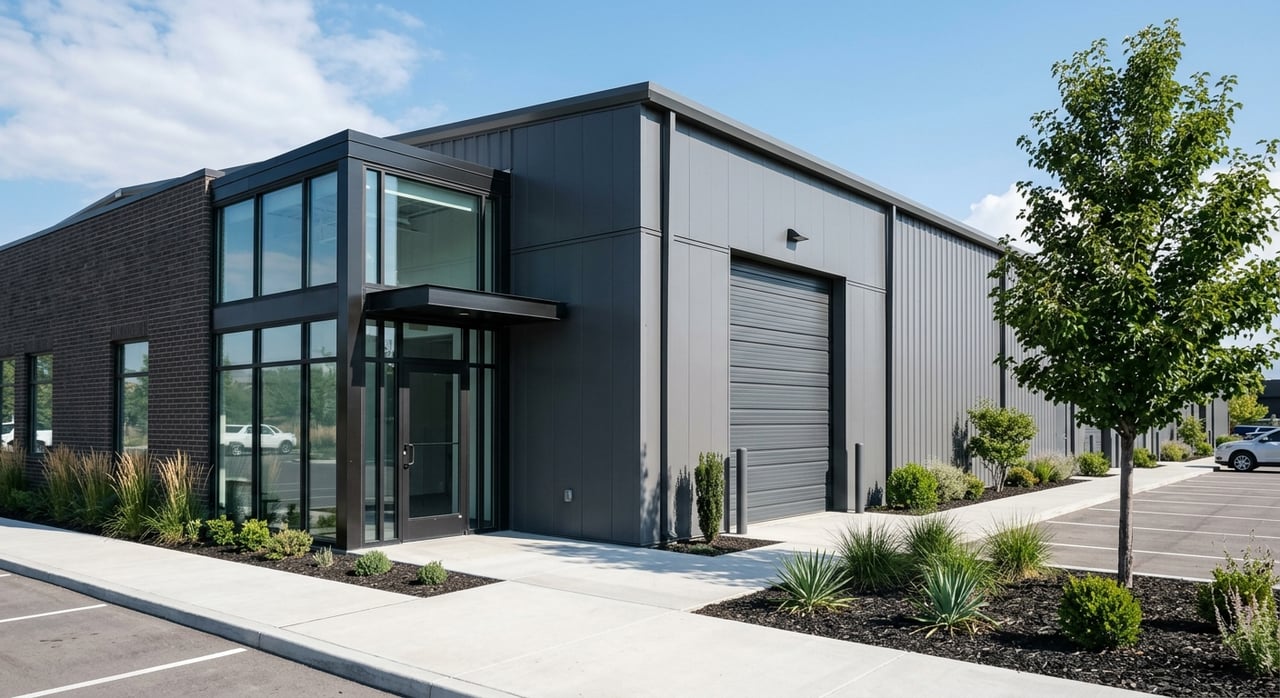
Need a small warehouse or flex space in Frederick County? The challenge is rarely just finding square footage. You also need a space that fits your daily operations, your budget, and the county’s zoning and permit path. This guide will help you sort through the main issues before you sign a lease, so you can make a more informed decision with fewer surprises later. Let’s dive in.
Why Frederick County Draws Small Industrial Tenants
Frederick County continues to stand out for businesses that need warehouse, flex, and light industrial space. County planning materials identify the south Frederick corridor along MD 355 and MD 85 as a major economic center, accounting for 20% of county jobs, 15% of business establishments, and 15% of total wages.
That matters if you are looking for practical access, business concentration, and established employment areas. It also means competition and site suitability can vary a lot depending on the corridor, the building type, and the intended use.
County planning also treats industrial and employment land as a strategic resource. The county has emphasized the need to preserve enough Limited Industrial and General Industrial land to meet business needs, which is a useful reminder that truly industrial options may be more limited than they first appear.
Know the Difference Between Warehouse and Flex
Not every industrial-looking building works the same way. If you are leasing small space, the most important first step is to match the property type to how your business actually operates day to day.
NAIOP defines industrial buildings broadly to include manufacturing, research and development, production, maintenance, and storage or distribution uses. Within that category, warehouse/distribution and flex space are different products with different strengths.
What warehouse space usually offers
A warehouse space is primarily built for storage and distribution. If your business depends on shipping, receiving, inventory storage, or equipment storage, a more warehouse-oriented space may be the better fit.
This kind of layout may be more practical if office needs are limited. The focus is usually on operational space rather than a larger front-office component.
What flex space usually offers
Flex space is designed to serve more than one function. NAIOP notes that flex buildings typically include at least 20% office area, which can make them useful if you need a mix of office, showroom, service, assembly, or light operational space.
For many small businesses, flex space works well when customers visit occasionally, staff need offices, or operations combine administrative and physical work under one roof. That can be a better fit than paying for a pure warehouse that does not support how your team actually works.
Frederick County Zoning Matters Early
Before you get too far into lease negotiations, confirm that your intended use matches the property’s zoning. In Frederick County, the planning framework identifies four main commercial and industrial zoning districts that often come up in these searches: General Commercial (GC), Limited Industrial (LI), General Industrial (GI), and Office/Research/Industrial (ORI).
Each district is aimed at a different set of uses. GC is more retail and service oriented, LI is intended for industrial operations with minimal off-site impacts, GI allows more processing and manufacturing activity, and ORI is generally narrower and focused on lower-impact office, research, and technology uses.
Why use compatibility can change everything
If you need warehouse use plus office, showroom, assembly, or a light manufacturing component, the details matter. A building may look right on paper but still create zoning or permit issues if the proposed use does not line up cleanly with the parcel and prior approvals.
That is why use compatibility should be checked before you sign. It is much easier to solve that question early than after lease negotiations are already underway.
What Current Market Numbers Suggest
Product type matters in Frederick County just as much as location. According to Cushman & Wakefield’s Q1 2026 Suburban Maryland industrial report, the Frederick County submarket showed 27.8% vacancy, with 168,000 square feet under construction and 508,639 square feet of year-to-date completions.
Those figures suggest there is available space in the market, but availability alone does not mean every option fits a small tenant’s use, budget, or timing. The more specialized your need, the more selective your search may still have to be.
In Cushman & Wakefield’s Q4 2025 report, Frederick County warehouse/distribution asking rent was $9.75 per square foot, while office-service/flex asking rent was $20.64 per square foot. Those are net asking rents, so they are best treated as a starting point rather than your full monthly cost.
Asking Rent Is Not Total Occupancy Cost
This is one of the biggest points small tenants miss. Two spaces can show similar advertised rents and still cost very different amounts once operating expenses and other charges are added in.
NAIOP defines occupancy cost as rent plus the tenant’s pro rata share of operating costs, personal property taxes, tenant insurance, and sometimes amortized tenant improvements. In plain terms, your true cost is usually broader than the base rate on the flyer.
Common lease structures to compare
NAIOP identifies several common lease types:
- Gross lease: the landlord pays operating expenses and real estate taxes
- Modified gross lease: expenses are split in a negotiated way
- Net lease: some expenses shift to the tenant
- Triple net lease: the tenant commonly pays taxes, maintenance, insurance, utilities, janitorial, and other operating costs
In many triple net structures, the landlord may still remain responsible for the roof, HVAC, and structure. Even so, your monthly occupancy cost can be materially higher than the quoted base rent.
What to ask before you compare spaces
When reviewing options, ask for a clear breakdown of:
- Base rent
- Operating expenses
- Utility responsibility
- Insurance responsibility
- Maintenance obligations
- Janitorial responsibility
- Any tenant-improvement repayment or amortization
That kind of side-by-side comparison often gives you a more useful picture than base rent alone.
Build-Out and Permit Timing Can Affect Your Move-In
If the space needs work before you can occupy it, lease terms should reflect that reality. Frederick County requires approval for new construction, modifications, alterations, or changes in use, and tenant fit-out applications are submitted electronically.
The county’s fit-out guidance also states that signed and sealed plans are required in many cases, with limited exceptions for minor interior or cosmetic work. That can affect both timeline and cost, especially if you are planning more than a basic office refresh.
Two common build-out approaches
NAIOP’s definitions help clarify two common approaches:
- Build-to-suit: designed for a specific tenant
- Turnkey space: delivered by the landlord ready for the tenant’s stated use
If improvements are part of the deal, the work letter should clearly spell out the improvements, the landlord and tenant cost split, the completion date, and contractor insurance requirements. That is one of the best ways to reduce confusion before construction starts.
Permit details that may affect timing
Frederick County’s process includes a few local details worth noting:
- If the property is served by Frederick County water and sewer, review by the Division of Utilities and Solid Waste Management may be required
- Capacity fees must be paid before building permit issuance when applicable
- If the property is inside an incorporated town, town paperwork is required before the county building permit application can be submitted
- The county offers a tenant occupancy permit application for no-construction situations
- The county also has an expedited EPIC path for small commercial businesses
Even a small project can involve more review than expected if the use is changing.
Special uses may trigger extra review
If your operation involves food service or other process waste, the county’s fit-out packet adds more review items. These can include grease interceptor requirements and an industrial waste survey.
That is a good example of why your intended use should be discussed early. A small warehouse or flex suite can still trigger multiple agency reviews depending on how the space will function.
Lease Clauses That Protect Flexibility
The best lease is not always the one with the lowest advertised rent. For many small businesses, the more valuable lease is the one that gives you room to adapt if your space needs change during the term.
Growth can come faster than expected, or slower. Your lease should account for that possibility where possible.
Pay attention to renewal options
NAIOP defines a renewal option as the tenant’s right to extend the lease term at a predefined rental rate. Just as important, that option often has to be exercised 30 to 180 days before lease termination.
Missing that deadline can mean losing the option entirely. If continuity matters to your business, those notice dates should be tracked well before the end of the term.
Think through sublease and assignment rights
Sublease and assignment language can provide useful flexibility if your needs change. NAIOP defines sublet space as space offered for lease indirectly by a tenant, and shadow space as space a tenant is holding for future growth or no longer needs after downsizing.
In practical terms, this means you should think ahead about what happens if you outgrow the space, need to reduce your footprint, or want to preserve options without overcommitting up front. The initial square footage choice matters, but the lease language often matters just as much.
A Smart Leasing Strategy for Small Users
If you are leasing small warehouse or flex space in Frederick County, the goal is to line up four things at once: the use, the zoning path, the occupancy cost, and the business’s next stage of growth. Focusing on only one of those can create expensive issues later.
A practical approach often includes:
- Choosing the right product type, not just the right size
- Confirming zoning and intended use early
- Comparing total occupancy cost, not just asking rent
- Understanding fit-out and permit timing before committing to a move-in date
- Negotiating renewal and flexibility language that fits your business plan
That kind of planning can help you avoid paying for the wrong space, the wrong lease structure, or the wrong timeline.
If you want senior-level guidance on leasing small warehouse or flex space in Frederick County, Dick Stoner offers practical tenant representation and lease advisory grounded in local market context and careful process management.
FAQs
What is the difference between warehouse and flex space in Frederick County?
- Warehouse space is primarily for storage and distribution, while flex space usually includes a meaningful office component and can support a mix of office and operational uses.
What are typical asking rents for small warehouse and flex space in Frederick County?
- Cushman & Wakefield reported Frederick County warehouse/distribution asking rent at $9.75 per square foot and office-service/flex asking rent at $20.64 per square foot in Q4 2025, with rates quoted as net asking rents.
Why does zoning matter when leasing industrial space in Frederick County?
- Zoning matters because Frederick County’s GC, LI, GI, and ORI districts allow different kinds of uses, so your intended warehouse, office, assembly, or light industrial use should be checked before signing a lease.
Does a tenant fit-out in Frederick County require permits?
- Frederick County says approval is required for new construction, modifications, alterations, or changes in use, and many tenant fit-out applications require signed and sealed plans.
What costs should you compare besides base rent for Frederick County flex space?
- You should compare operating expenses, utilities, insurance, maintenance, janitorial responsibilities, and any tenant-improvement costs in addition to base rent.
When should you review renewal options for a Frederick County lease?
- You should review renewal option deadlines early because NAIOP notes that these options often must be exercised 30 to 180 days before the lease ends.